
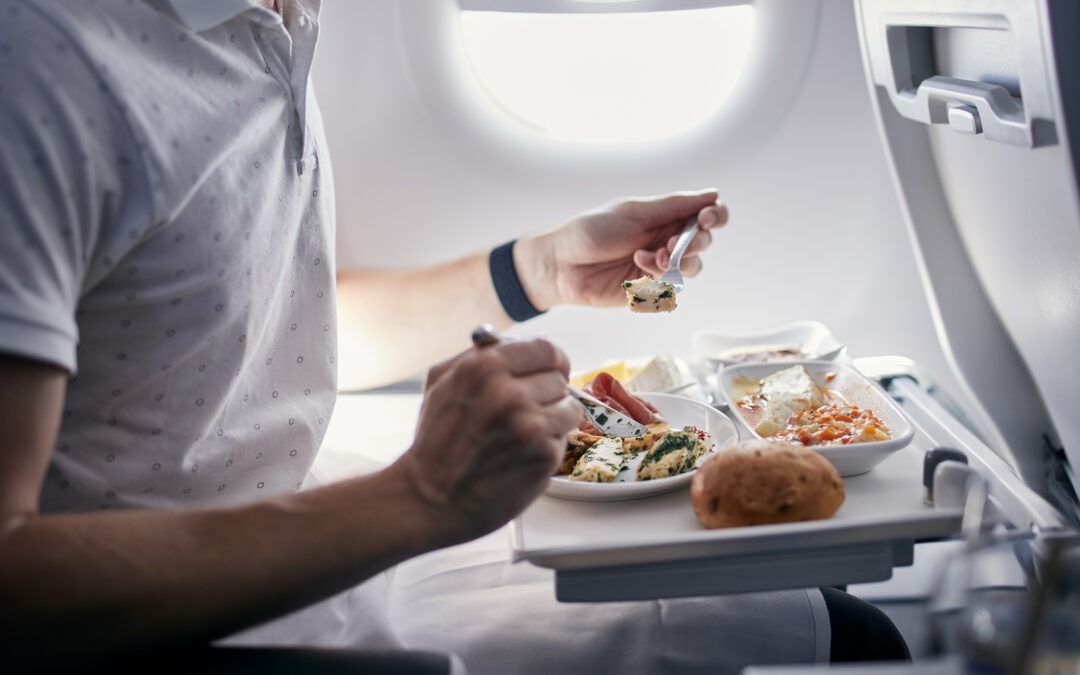
The in-flight meal is eagerly awaited and sometimes decisive for the travel experience, yet it conceals a combination of largely unknown expertise: cooking, precision logistics, airport security and some of the strictest health requirements, all under time pressure and the uncertainties of day-to-day operations. This “Focus métier” takes you behind the scenes of airline catering, the little-known art of getting the right meal to the right passenger at the right time.
Airline catering in one sentence
Airline catering covers all the food and beverage services provided to passengers and crew on board an aircraft, prepared on the ground, packed into meal trays and reheated and served in the cabin.
But above all, it is behind-the-scenes work in which everything must be ready and compliant before the aircraft doors even open. A key ground handling activity, airline catering sits at the crossroads of three complementary worlds:
- Large-scale food production (central kitchens, assembly of meal services),
- Precision logistics (sequencing of steps and operational coordination),
- Service (airline brand image, onboard comfort, special diets).
What catering actually does
Producing meals in countless combinations
In flight, every meal, snack or light bite hides a finely tuned level of customisation that meets several requirements. The food offer must first reflect the airline’s identity (its positioning, standards and style) and then adapt to the characteristics of the flight. Service times, formats and quantities differ considerably between short-haul, medium-haul and long-haul flights, and between traditional and low-cost carriers.
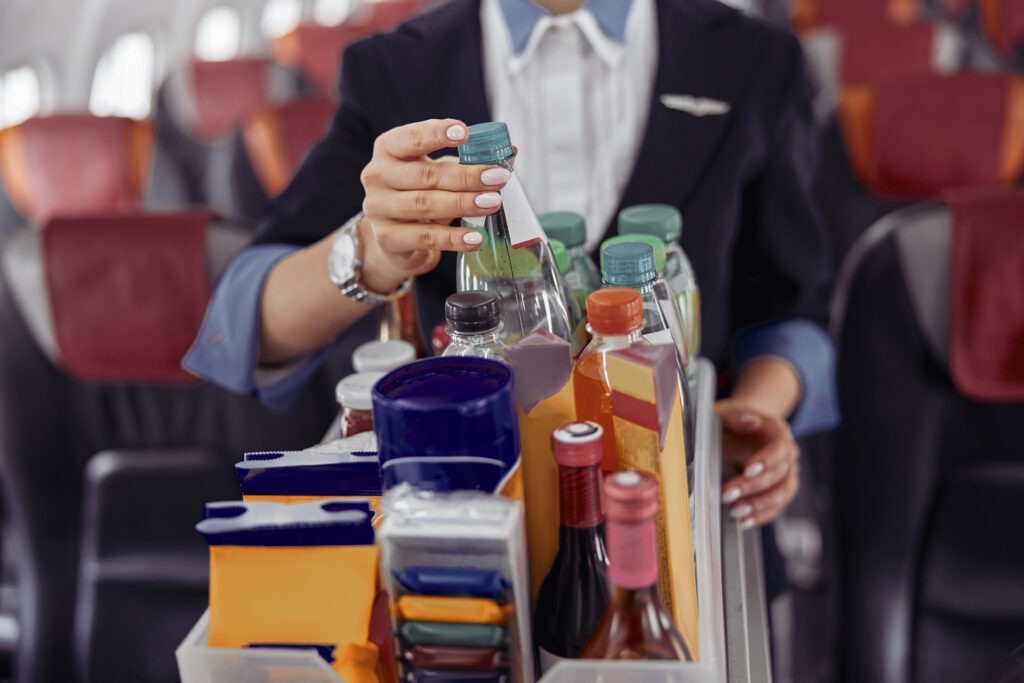
The catering service also adapts to the expectations and specific needs of each passenger.
Special meals, whether linked to dietary habits, allergies or religious practices, follow a precise coding system. Codes standardised by IATA (the International Air Transport Association) make it possible to identify the different requests and to pass them on between the catering stakeholders.
Particular attention is also paid to pilots’ meals: to limit the risk of simultaneous incapacitation caused by food poisoning, separate meals are provided for the captain and the first officer. The arrangements are defined by each airline in its operating procedures.
Temperature control is paramount. From chilling through to plating, it preserves the quality of the preparations while guaranteeing their food safety. Maintaining the cold chain keeps meals at their best right up to the moment of service.
Finally, constraints specific to in-flight catering are also taken into account: taste is perceived differently at altitude (the dry air dulls salty and sweet flavours), the means of reheating in the cabin are limited, and weight and volume are critical.
« Airline catering means adapting to the specific needs of each airline while meeting demanding standards of quality, hygiene and food safety. Beyond the agility it requires, these professions above all call for excellence and genuine passion. »
Claude Deorestis, Honorary Chairman of the CSAE
Preparation and sourcing
In airline catering, meal preparation relies on an organisation that combines supplier selection, food procurement and culinary production.
Purchasing teams and head chefs work closely together to select the ingredients and products suited to airline menus. Some are specially developed to meet the requirements of airline catering, while others come from traditional food service suppliers.
Beyond taste, their selection must take many criteria into account: food safety, traceability, supply reliability, cost and the ability to produce in large quantities.
Meals can then be prepared directly in the kitchens of catering units located at or near airports, or in specialised production centres. Depending on how each company is organised, some dishes or components may also be prepared by external suppliers.
In every case, the goal remains the same: to guarantee quality meals that meet airlines’ requirements, while respecting food safety constraints and the timings of airport operations.
Ensuring quality, hygiene and food safety
Airline catering is subject to very strict standards. To ensure food safety, teams apply the HACCP method (Hazard Analysis and Critical Control Point): control of cooking, cooling and storage temperatures, batch traceability, controlled cold and hot chains, specific uniforms and practices (chef’s hats, overalls, gloves) and systematic cleaning of workstations and equipment.
Airport security also imposes particular requirements. Employees who need to enter restricted airside areas must be cleared by the security services before they can do so. Vehicles, trolleys and containers are inspected, and each trolley is sealed before loading. An oversight or a procedural error can have direct consequences for passengers’ health, a flight’s punctuality or the airline’s image.
Delivering on time: constant agility
Catering professionals must contend with one constraint, time, and one requirement, coping with operational uncertainties.
Organisation and coordination are therefore essential: a delay in one preparation or delivery step can ripple through the entire chain and affect the operations taking place simultaneously around the aircraft.
Every minute counts, at every link in the chain, including when the unexpected happens.
For example, when an aircraft change occurs shortly before departure, the teams must adapt the planned organisation:
- Checking the services required,
- Readjusting the preparations,
- Checking compliance,
- Arranging delivery to the new aircraft.
All these steps must be rescheduled within the time available, without compromising the requirements for quality, hygiene and safety.
Another challenge is handling last-minute passengers (go-shows). Teams of runners are deployed across the apron to bring the meals needed directly to the aircraft. Conversely, when a passenger fails to turn up (no-show), the meal tray prepared for them becomes a surplus that must be handled according to the procedures in force.
« We turn every unforeseen event into a learning opportunity. An incident is never just a mistake: it becomes one more step in our continuous improvement approach. That is how we grow, with rigour and humility. »
Caroline Marchand, Managing Director, Atlant Services
Included or paid meals: two models on board
In airline catering, two models can be distinguished:
- Included catering: meal services are included in the ticket price and funded by the airline.
- Buy on board: meal services are sold directly to passengers.
The two models can coexist within the same airline, depending on the route, the flight duration or the travel class.
Buy on board has developed particularly with the rise of low-cost carriers and on short- and medium-haul routes. By offering paid services, buy on board helps airlines grow their ancillary revenue and increase average revenue per passenger. It is thus a complementary lever for their business model.
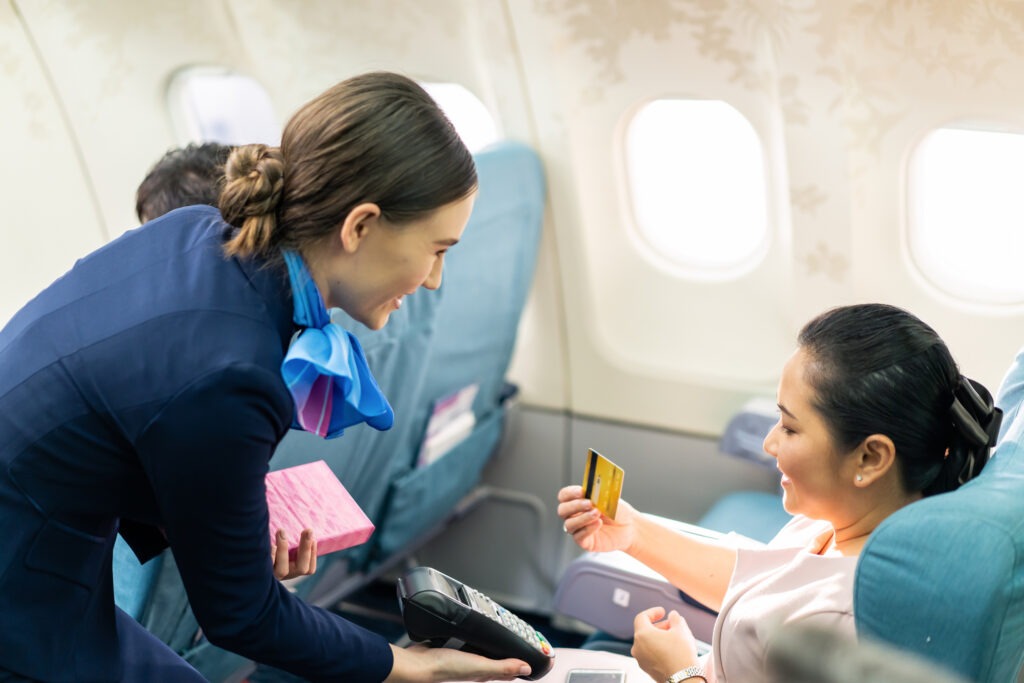
Buy on board relies mainly on individually packaged products designed to be easily distributed and consumed on board, with simplified service.
For airline catering professionals, the requirements remain the same whichever model is used: food safety, respect for the cold chain, product traceability and the logistical constraints of airport operations.
However, buy on board calls for particularly rigorous management of supplies, stock and the quantities loaded. The challenge is to forecast consumption as accurately as possible in order to meet demand, limit unsold items and optimise the profitability of the activity.
Online pre-ordering, offered by some airlines, also helps to forecast needs more accurately and to reduce food waste.
Catering in business class
In business class, airline catering plays an important role in the passenger experience and in customer loyalty. To this end, some airlines call on top chefs, often Michelin-starred, to create signature dishes.
Given the constraints of flying and altitude, their creations cannot simply be existing recipes carried over as they are: they must be rethought to take account of the particular conditions of air transport, while retaining their gastronomic qualities.
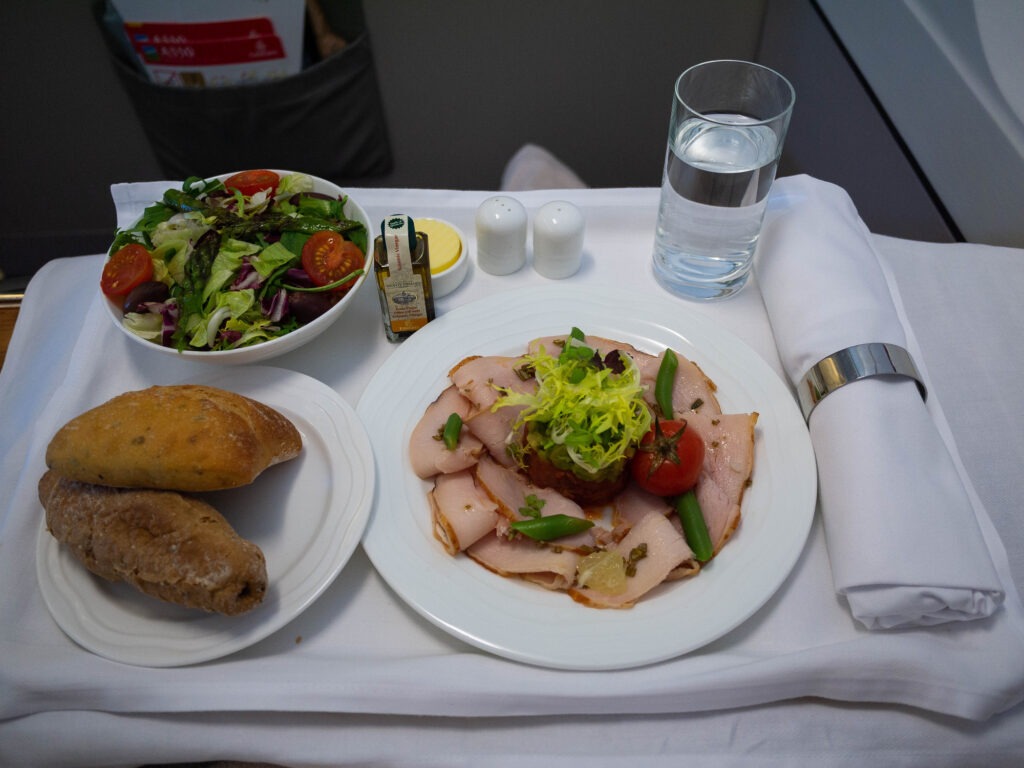
This adaptation is genuine technical work. Low-temperature sous-vide cooking, carried out directly in the catering kitchens, helps preserve the tenderness of meats and intensify flavours. This is an advantage at altitude, where taste perception is altered, as it avoids over-salting dishes. The recipes concerned are also subject to microbiological analysis to guarantee food safety.
To guarantee this level of excellence, the kitchens dedicated to first class are often separate from the rest of the airline catering production.
The catering chain: from the kitchen to the cabin tray
From designing the food offer through to sorting and cleaning, by way of delivery on board, here are the 5 main stages of the airline catering chain…
1st stage: Upstream work
Catering operators and airlines define the menus together.
Chefs, nutritionists and marketing teams work together to propose an offer that takes into account all the constraints and possibilities of in-flight catering.
2nd stage: Production in the central kitchen
It takes place in catering units located at or near airports, where every step is traced:
- Receipt and inspection of raw materials: meat, fish, fresh and frozen products
- Cooking and chilling: dishes are cooked, then rapidly chilled for positive-temperature cold storage (generally the day before the flight)
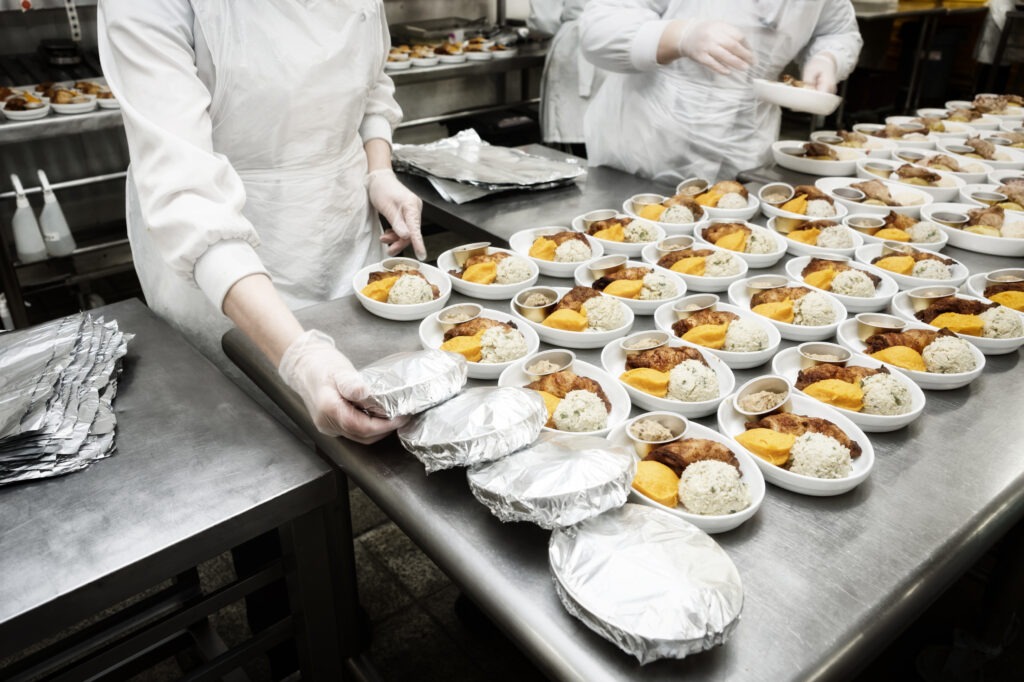
- Cold preparation: plating, portioning, packing into containers, labelling
- Tray assembly: assembly of the various items (main course, side dish, dessert, cutlery, condiments, beverage) according to very precise specification sheets
- Trolley loading: everything is then loaded into trolleys dedicated to food and beverages.
3rd stage: Loading and delivery to the aircraft
Once the trolleys are ready, an inspector checks that the flight order is complete: number of meals per class, presence of special meals, completeness of all items.
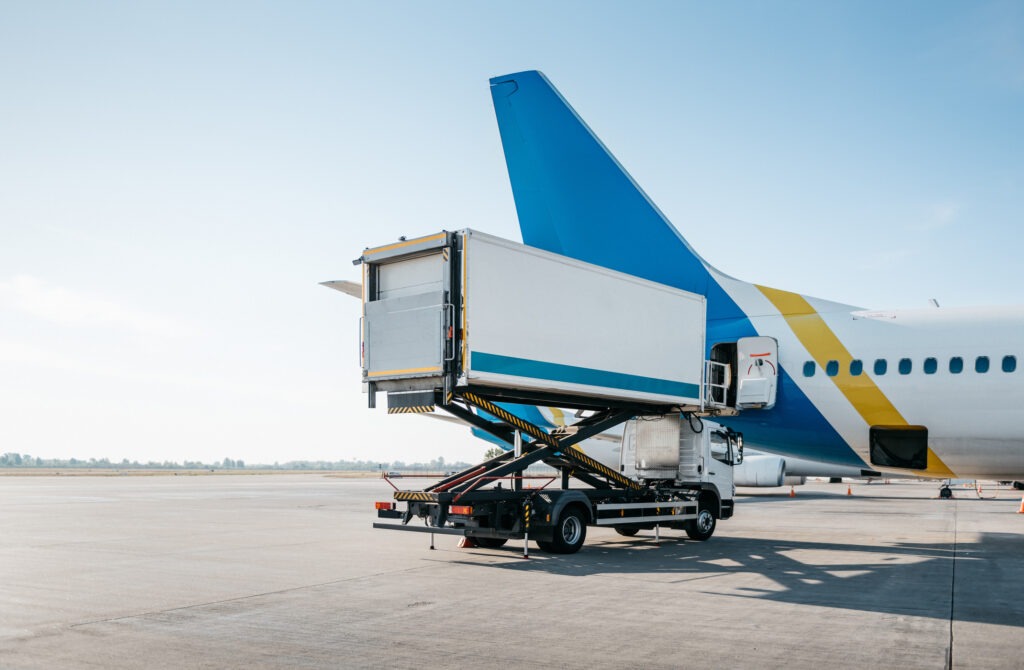
Seals are fitted to each trolley before they are loaded onto catering trucks and driven out to the airside area.
The trucks then position themselves at the aircraft’s service doors, opposite the boarding doors, so as not to interfere with passenger flows.
The teams unload the trolleys from the previous flight and load those for the upcoming flight.
Each trolley is then placed in the aircraft’s galley (a space designed for storage, final preparation and service). A label indicates its specific location so that the crew can easily find it according to the service to be carried out.
4th stage: On board, serving passengers
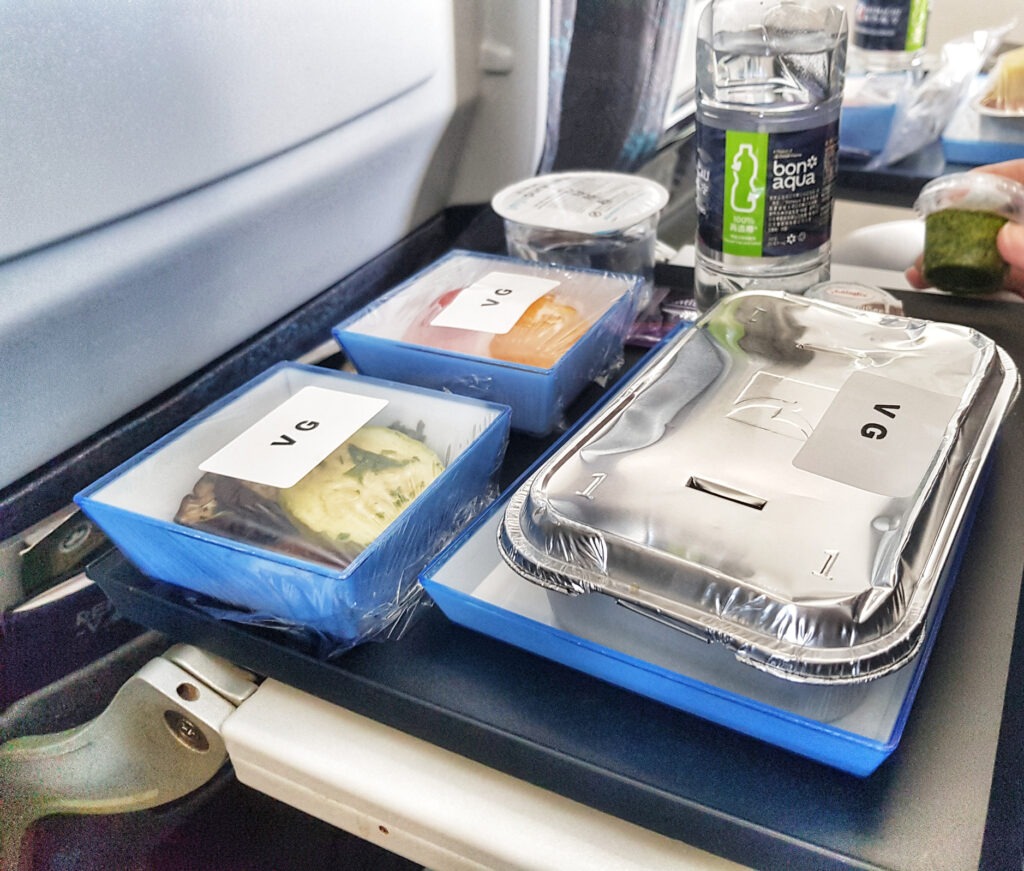
In flight, the crew retrieves the trolleys and prepares the service. Meals are reheated in the aircraft’s ovens according to precise instructions, then served to each airline’s own standard.
For the passenger, this is a key moment of the flight experience. For airline catering professionals, it is the culmination of the work of an entire chain of trades.
5th stage: Return, sorting and cleaning
On landing, the trolleys are unloaded from the aircraft and brought back to the catering area.
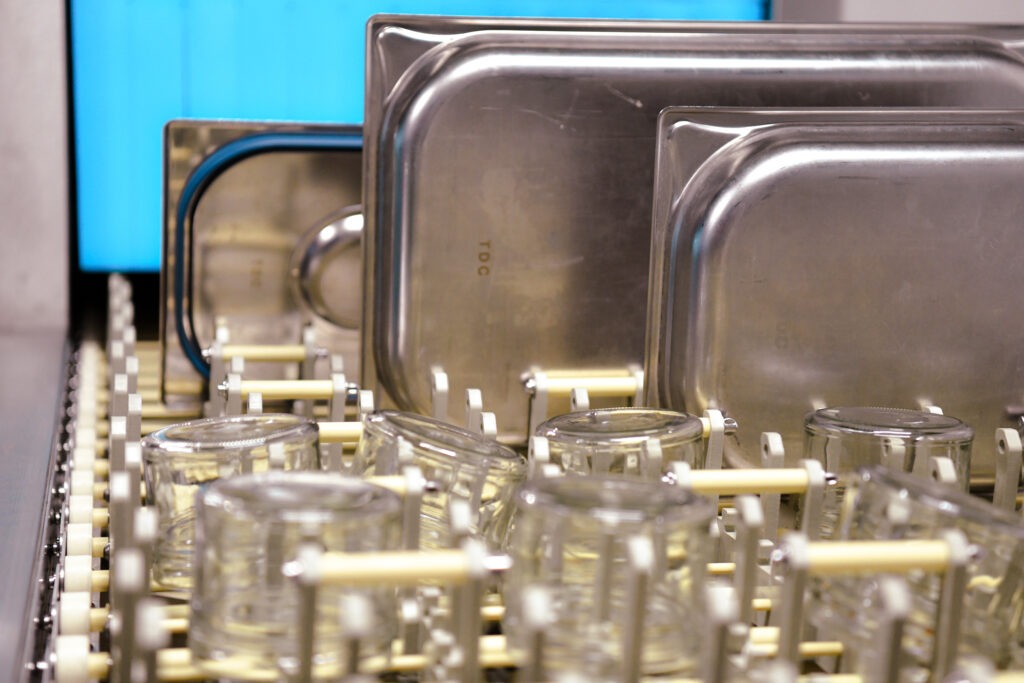
The teams sort the items before the dishwashing area cleans the dishes, cutlery and trolleys for the next flights.
Equipment is restocked and returned to inventory for new loadings. It is a loop that repeats continuously, 24 hours a day, 7 days a week, in step with air traffic.
Who does what? The main airline catering professions
Airline catering involves a wide variety of professions within ground handling. Here are some of the roles that contribute to this activity every day.
Catering cook
- Prepares dishes according to the recipes and standards defined with the airlines. Responsibilities include cooking, seasoning, temperature control, compliance with specification sheets and traceability of preparations.
Tray preparer / tray assembler
- Plates up the cooked items, checks their weight, appearance and compliance, then assembles the various elements of the tray and places them in the trolleys according to the loading plan.
Catering agent / ground handling agent, “commissary” service
- Receives and inspects trays and equipment, organises the loading and unloading of trolleys, drives airside vehicles and ensures that the services are delivered to the aircraft. They also liaise with the crew in the event of an anomaly or a necessary adjustment.
Supervisor / team leader
- Organises flows, allocates teams and manages the unexpected, in particular delays and aircraft changes. They also act as the link with airlines and the other ground handling trades.
Quality controller / flight inspector
- Checks that services are compliant before loading: number of meals, special meals, presence of the various items and seals.
Logistics specialist / planner
- Works on volume forecasts, stock optimisation and resource planning based on the flight schedule.
« Catering profiles are very varied. It is the ground handling activity where you encounter the widest range of know-how: from the kitchen to the ramp, from assembly to inspection, from the dishwashing area to dispatch. This diversity is our strength. »
Claude Deorestis, Honorary Chairman of the CSAE
Cargo catering
Cargo catering refers to meal services intended for the crews of cargo airlines.
Unlike passenger flights, quantities are limited and there is no service differentiated by travel class.
However, the activity must adapt to the specific features of cargo operations: irregular hours, night flights, long rotations and frequent operational changes, all of which demand great flexibility and responsiveness.
Current challenges and trends
A profession evolving with air transport
Like other ground handling activities, catering is evolving with the transformations of air transport and with passengers’ expectations. Personalisation in particular is playing a growing role: pre-ordering of meals and the use of available data make it possible to anticipate needs better and to adjust the quantities prepared. The aim is also to limit unnecessary consumption and waste.
Environmental challenges are also changing practices, whether by reducing packaging, changing the choice of products or adapting menus to new eating habits. At the same time, digital tools make it easier to monitor services, manage operations and ensure their traceability.
These changes do not alter catering’s fundamental mission: to deliver a service that is suited to, and meets the expectations of, the airline and its passengers. They do, however, change the skills and ways of working of professionals, who must combine operational know-how, adaptability and new technologies.
Key figure: 1 in 4
In conventional airline catering, the workforce is split fairly evenly across four main activities:
- 1 in 4 professionals works in meal preparation and production
- 1 in 4 in cleaning and equipment management
- 1 in 4 in airside operations: transport, loading and unloading
- 1 in 4 in coordination, management and supervision of operations
Our members
These are the CSAE members offering airline catering services: