
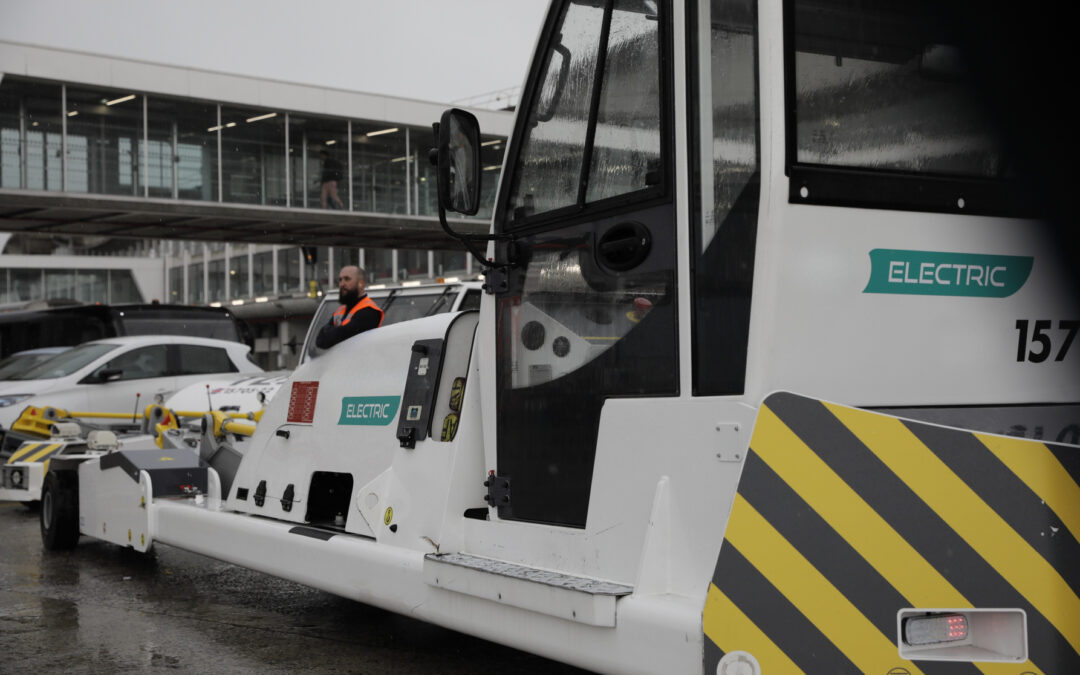
The new edition of CSAE’s key figures confirms the energy transition of the ground handling sector, a solid and measurable trajectory.
Continued progress and broader engagement
The proportion of electric or low-carbon vehicles now stands at 53.22%, representing a 6-point increase in one year.
This development is all the more significant as it is based on broader participation:
- 19 contributors (+7 vs 2024),
- 29 airports represented (+8 vs 2024),
- 6,672 vehicles registered, an increase of 13%.
This broader contribution reflects the growing mobilisation of stakeholders, which is essential for building a coherent national vision of greening.
A more modern, reliable and resilient fleet
The average age of the fleet is decreasing once again, reaching 10.3 years (compared to 11.8 years in 2024).
This regular rejuvenation is not only a reflection of greening: it reflects an active renewal policy, which has multiple benefits:
- Improved reliability and operational availability,
- Reduction in long-term maintenance costs,
- Enhancing operational safety,
- Faster dissemination of the most effective technologies.
These figures demonstrate that the energy transition is also a driver of overall performance for support fleets.
A collective transition that calls for sustainable structuring
In order to maintain this positive momentum, three structural conditions emerge from the report:
- Enhanced investment support, essential to offset the additional costs associated with electrification.
- Clear visibility of charging infrastructure, in close collaboration with airport managers.
- A balanced sharing of costs between airports, airlines and ground handling staff.
See the report for more information.